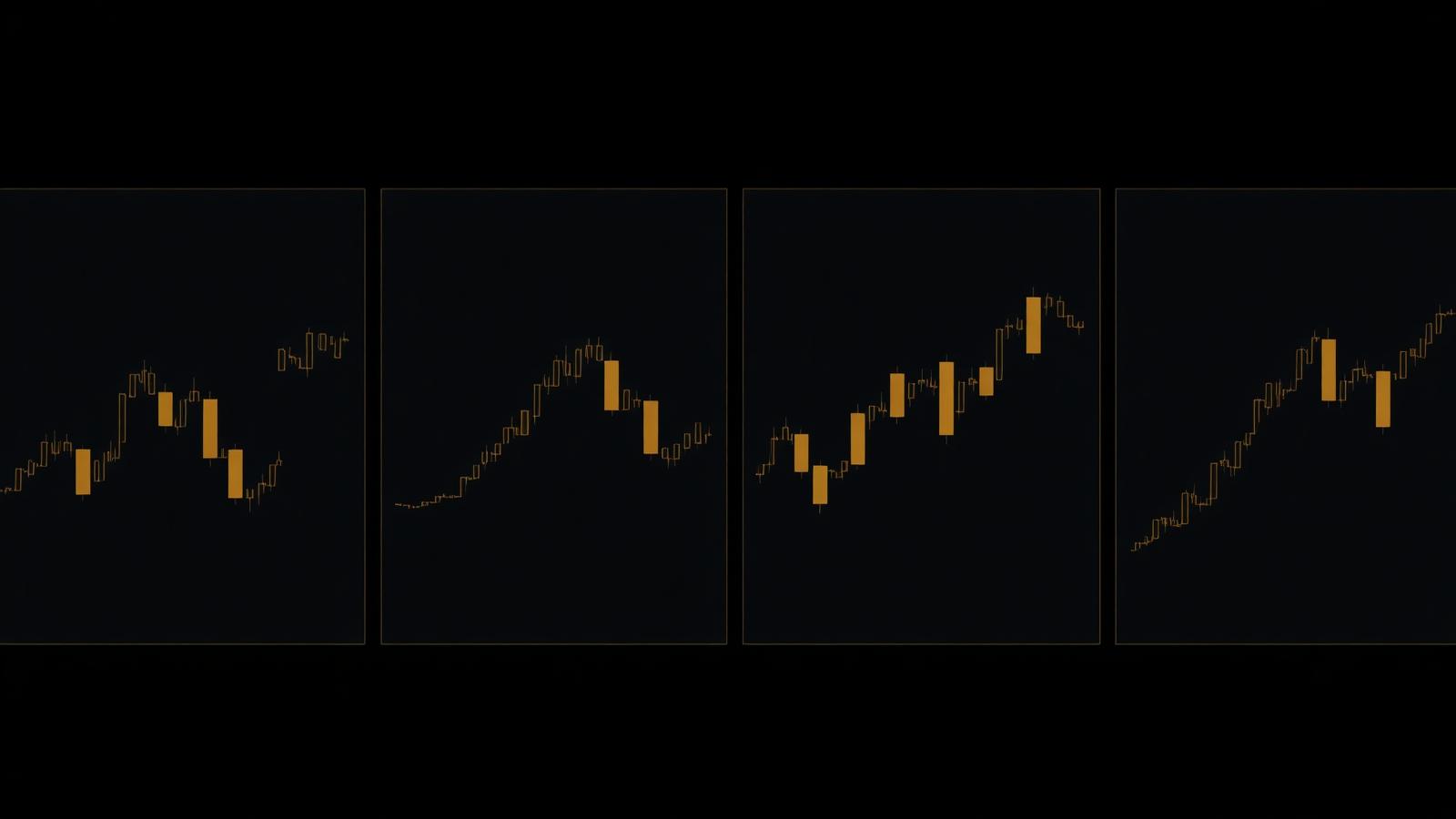
Short answer
An order block is the last opposing candle before displacement. A breaker block is an order block price closed through and reclaimed, so it flips direction. A mitigation block is the origin of a failed push where trapped traders exit near break-even. A fair value gap is the three-candle imbalance the displacement leaves behind.
The four zones side by side
| Zone | What forms it | How to mark it | Entry trigger | Best used for |
|---|---|---|---|---|
| Order block | Last opposing candle before displacement | Body to wick extreme of that candle | First return to the zone | Continuation with the draw on liquidity |
| Breaker block | An order block closed through, then reclaimed | Body to wick of the original block | Retest from the new side after the reclaim | Reversals after a failed level |
| Mitigation block | The origin of a push that failed to continue | Body of the origin candle | Return to the origin as trapped orders exit | Second-chance exits and reversal confluence |
| Fair value gap | A three-candle imbalance left by displacement | Wick of candle 1 to wick of candle 3 | Price trading into the unfilled gap | Timing entries inside a bigger zone |
Order block
The baseline zone. It has not failed yet, so it is a continuation tool: you want it sitting at swept liquidity with a displacement leg that shifted structure. Detail and worked NQ examples are in the order blocks guide.
Breaker block
The same zone after failure and reclaim. Because you already watched the level break, a breaker is the reversal counterpart to an order block. It requires a body close back through the block — a wick is not a reclaim.
Mitigation block
Where a push started, ran out of steam, and left buyers or sellers trapped. When price returns, those traders exit at break-even, which supplies the pressure for the next leg. It is weaker alone but strong as confluence with a breaker or an FVG.
Fair value gap
Not a block at all — an imbalance. FVGs are the best timing tool of the four because they define a precise price band inside a wider zone, which keeps the stop small.
Which one am I looking at?
Did price close back through the old zone? If yes, it is a breaker. If no, and the zone is untouched, it is an order block. If the zone is where a failed push began, it is a mitigation block. If it is a gap between wicks, it is an FVG.
When two overlap, which wins
- — Breaker + FVG overlap — the highest-confluence combination on NQ, known as the Unicorn Model. Take it.
- — Order block + FVG overlap — trade the FVG band inside the block for a tighter stop.
- — Mitigation block + breaker — treat the breaker as the level and the mitigation as extra confidence.
- — Order block against a breaker in the opposite direction — the breaker wins; it has already proved the level failed.
Practise the distinction
The fastest way to internalise these four is to label them on live-looking data. Load a random session in the replay trainer with FVGs and order blocks drawn automatically, pause at each zone, name it out loud before pressing play, then check whether price treated it the way your label predicted.